Combat
Two fighters, two clocks, and a short sequence that runs on every swing.
Your fighter and the thing in front of them both swing on their own clock, as fast as their weapon allows, until one of them is at zero. You do not press anything. What you chose in town is the whole of your input.
What happens on a swing
Every hit runs the same short sequence. Each step can cancel the one before it.
- Your weapon's damage is the starting number.
- If the hit is a critical, that number goes up.
- They try not to be there. Dodge is checked, then block. Either one and the hit does nothing at all.
- If it lands, their armour and elemental resistance each eat a share.
- What is left comes off their health.
Dodging and blocking happen before armour is considered. A hit that was avoided is avoided completely, not reduced.
Your critical chance stops at 60%, and a critical hit does at most 2.5 times its normal damage. Gear and Precision past those limits add nothing.
Steel and magic are the same thing twice
There are two kinds of damage and no more. Physical damage is stopped by armour. Elemental damage is stopped by elemental resistance. That is the whole counter system.
Weapons are never a mix of the two. A dagger, sword, axe or greatsword is pure physical. A wand, conduit or staff is pure elemental. Neither side is stronger. They are mirrors of each other, tuned to be equal.
Fire, ice and the rest are flavour. There is no separate fire resistance to build, and there never will be. One stat stops all of it. What does change from zone to zone is which kind of damage you walk into. A zone that throws mostly magic at you will find thin resistance, and a zone that throws steel will find thin armour. Each zone drops the defence it presses on.
Not being hit
Three things can happen instead of taking a hit cleanly.
- Dodge. You take nothing. It stops counting past 50%.
- Block. You take nothing. It stops counting past 40%. An off-hand carries some for free, just for being an off-hand.
- Graze. You take 50% of the hit. The blow you almost got out of the way of.
Dodge is checked first, so dodge and block do not simply add together. Block only sees the hits dodge let through.
Graze is the small, frequent one. A defence that fires often and saves a little holds up more evenly than a rare chance to negate everything, because the rare version has worse bad nights.
Armour and resistance
Neither is a flat subtraction. Both are measured against the size of the hit coming in, so the same armour eats a bigger share of a small hit than of a huge one.
That has a useful effect as you go deeper. Hits get bigger and your armour grows with them, so the share it saves you stays roughly steady instead of fading to nothing.
It also means armour does most against fast attackers that chip at you, and least against slow enormous ones. Health is what carries you through those.
Some gear goes further. Penetration ignores part of the armour or resistance in front of you. Reduction takes a flat amount off each hit you receive. Crit protection blunts their critical hits in particular. Each of these stops counting once your gear totals 40% penetration or 60% crit protection.
What your weapon does for free
Every weapon type grants an ability just for being that type. It is never luck and never a rare find. Every greatsword does the same thing, and so does every axe. The type you carry is the decision, and the stats on the item are how far you take it.
Steel
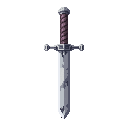
Dagger
Phantom Step
Every 6 seconds, the next hit misses you and you backstab. A very big hit still gets partly through.
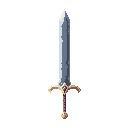
Sword
Requital
Block a hit and you counter it hard. Ready again 4 seconds later, or at once if you block a critical hit.
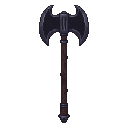
Axe
Berserker
Every 10 seconds, go berserk for 4 seconds: you hit faster and harder, but physical hits hurt you more.
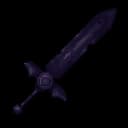
Greatsword
Sanction
Every 8 seconds, a big swing no one can dodge or block. Each hit makes the next stronger, up to 3 times.
Magic
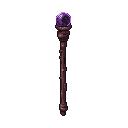
Wand
Reprise
Each bolt that lands may strike again, and each repeat may too. Your bolts can't be countered.
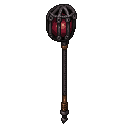
Conduit
Arc
Every 5.6 seconds, releases part of the damage you dealt. It breaks an enemy's big swing or berserk.
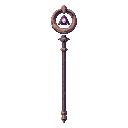
Staff
Bulwark
For up to 8 seconds, a shield takes half of each hit and strikes back. Back 12 seconds after it goes down.
Monsters carry abilities too, but fewer than you might expect. Most of what you meet fights plainly, and the ones with something to show are grouped into a few families per zone. Each zone page lists what lives there.